Bridge Adult Services Center is a non-profit organization serving adults with intellectual disabilities in Amherst, Nova Scotia, Canada.
This case study from my service design class at SCAD involved studying the business, visualizing a particular aspect of their services using different frameworks, and, in some cases, identifying opportunities and offerings. I worked with one other student on this.
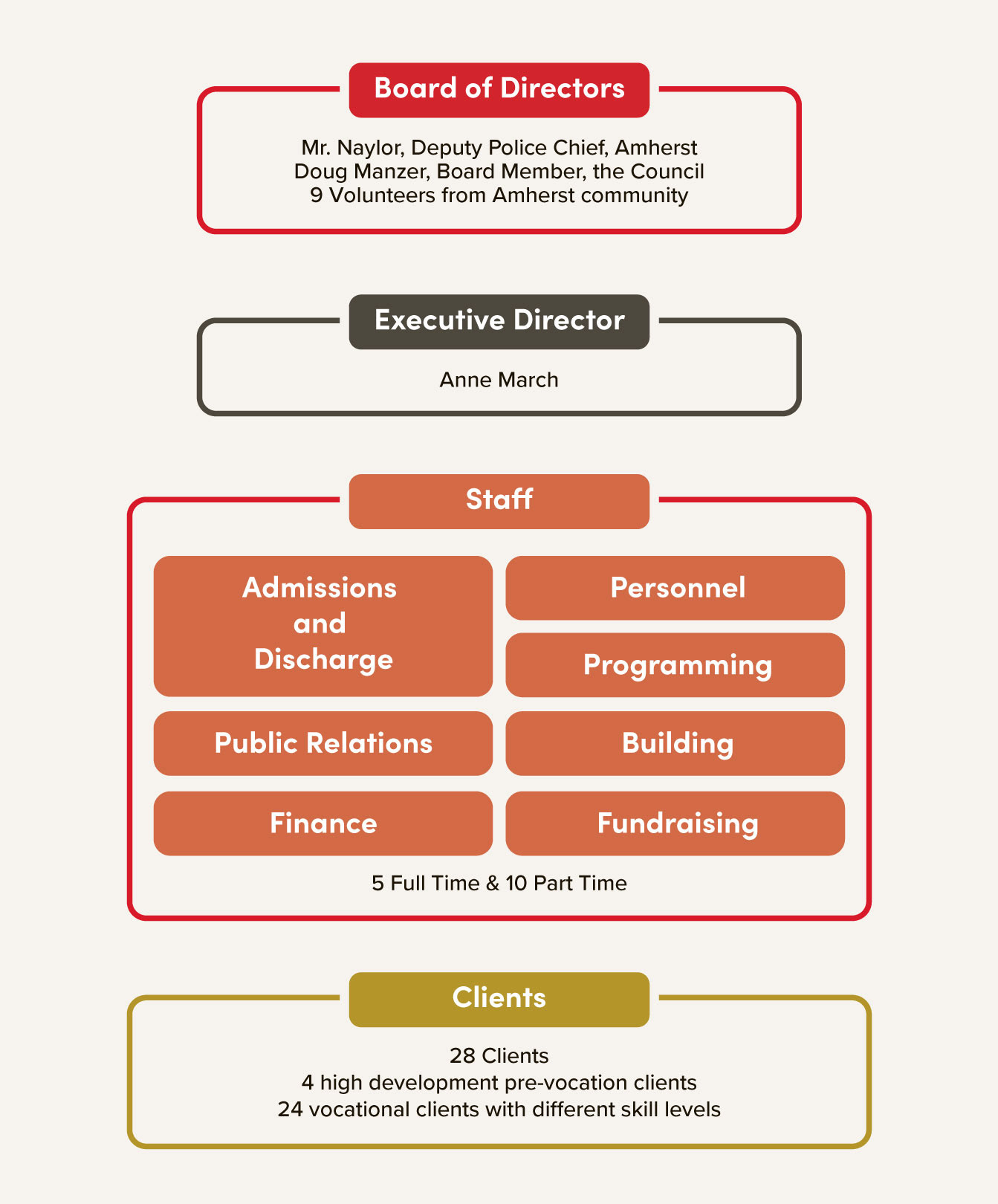
Internal Organization
BASIC INFORMATION
Bridge Adult was established in 1965 as an activity-based program by the parents of individuals with intellectual challenges.
At the time of this case study, Bridge Adult employed 15 people. Apart from that, Bridge Adult had 7 volunteers working as staff from the nearby community college.
There were 27 other Adult Service Centers in Nova Scotia province. Department of Community Services (DCS) provides funding for all 28 Adult Service Centers in Nova Scotia.
Mission Statement: The mission of Amherst Bridge Service Center is to provide programs, services, and opportunities for adults with intellectual disabilities to allow them to reach their full potential as members of our community.
Bridge Adult operates a laundry center and a used clothes store.
STAKEHOLDERS ANALYSIS
We categorized stakeholders as internal to Bridge Adult and external to Bridge Adult. As explained in the figure, external stakeholders are categorized as Government, Donors, Competitors, and Partners.
Government includes the Government of Nova Scotia, the Government of Cumberland County, Nova Scotia, and the Canadian government. Bridge Adult is a taxpayer to all these authorities and, in exchange, receives services and benefits. Being a renowned not-for-profit in town, Bridge Adult also enjoys a concession from Amherst town on property taxes.
All competitors of Bridge Adult, other adult service centers in Nova Scotia, are members of the Directions Council for Vocational Services Society (the Council).
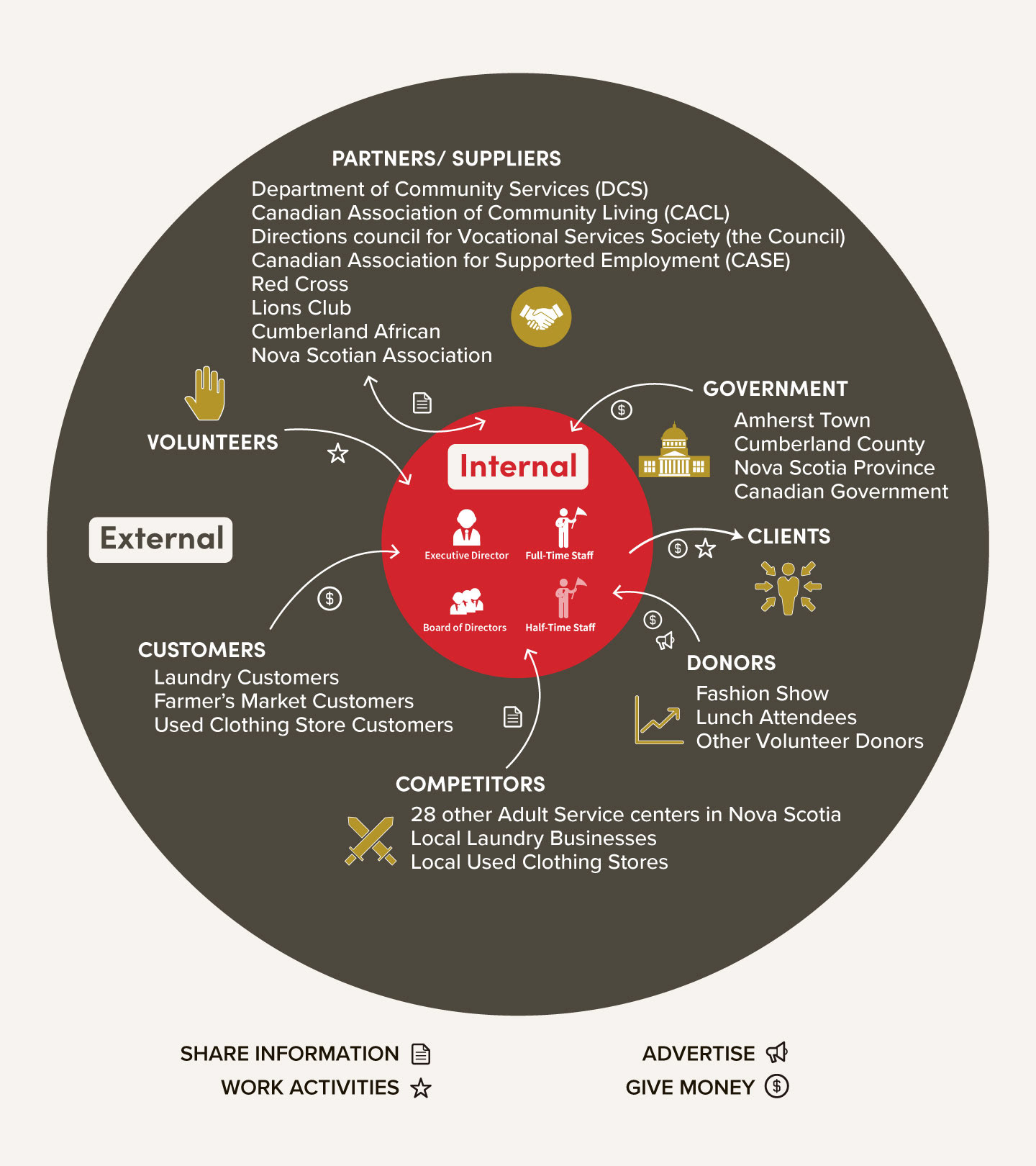
Stakeholder Map
BUSINESS MODEL CANVAS
We used Business Model Canvas to understand and analyze the services offered by Bridge Adult.
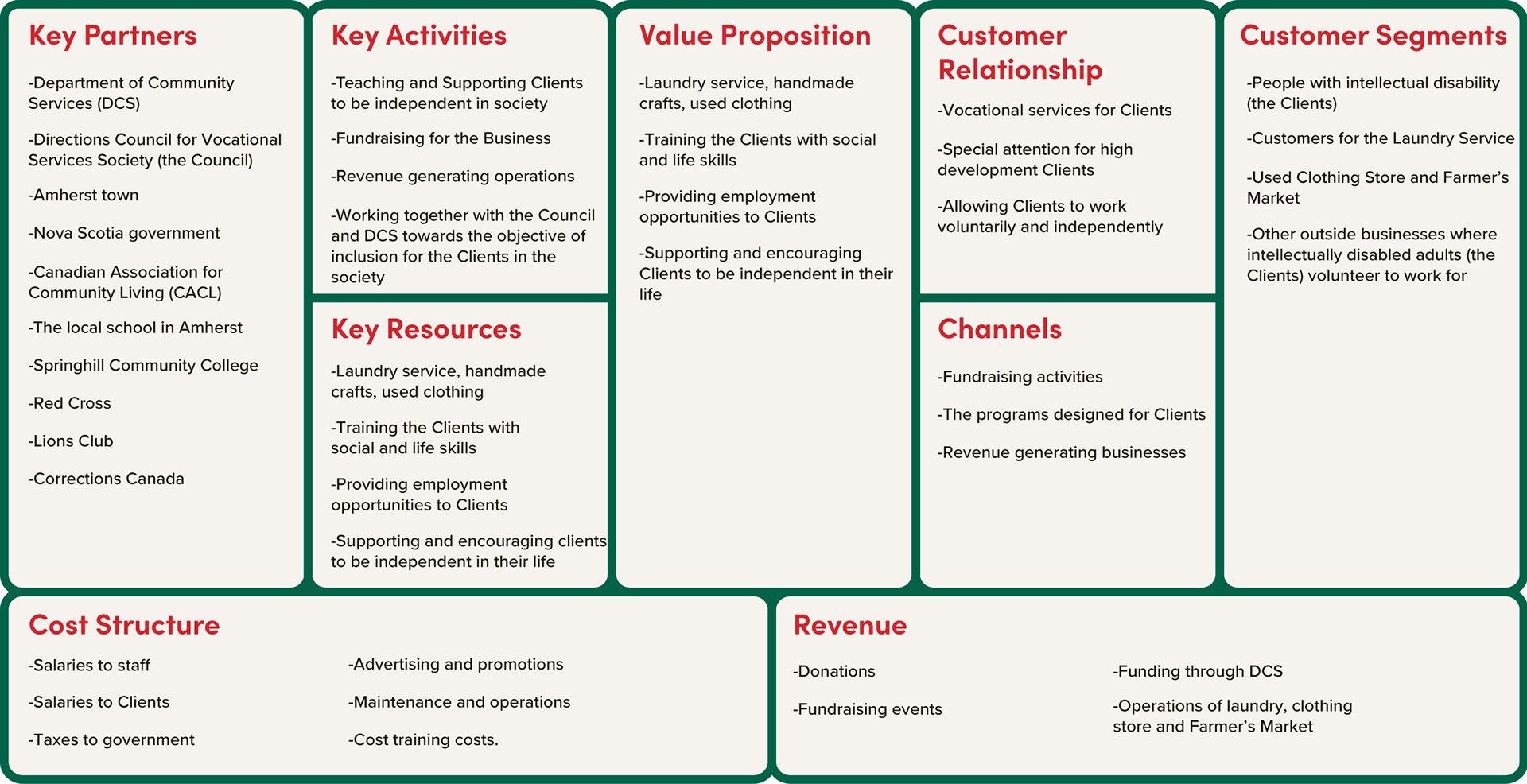
Business Model Canvas
SOCIAL BUSINESS MODEL CANVAS
Social Business Model Canvas is an iteration of Business Model Canvas we used to come up with potential changes for the business and study their impact on the Service Offering and on the Service Delivery.
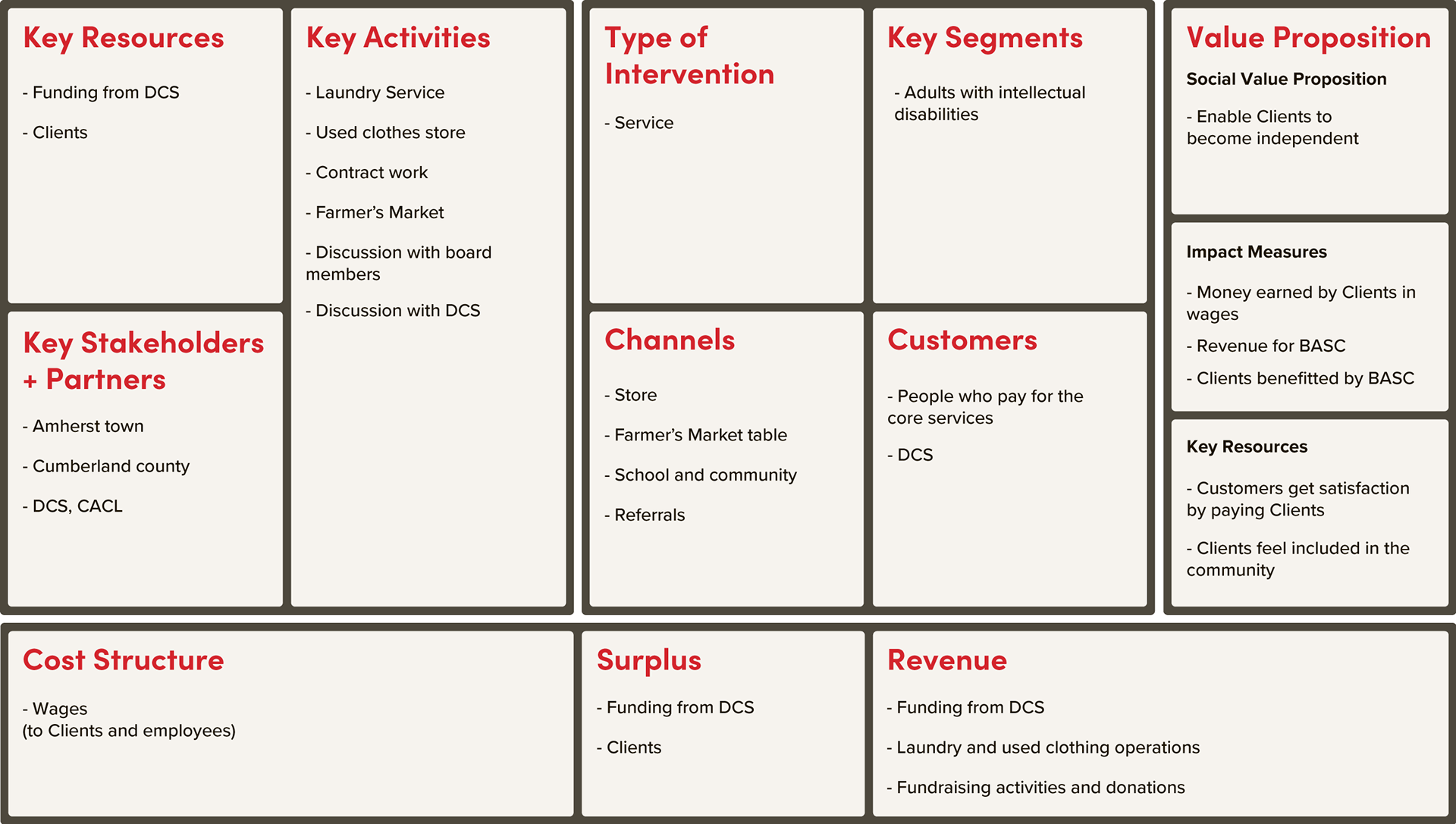
Social Business Model Canvas
Along with the Social Business Model Canvas, we also used the Value Framework Model from Elke Den Ouden's "Advanced Design Methods for Successful Innovation". We assessed the value being shared at four levels: Society, Ecosystem, Organization, and User. The four perspectives used in the value framework model were economy, psychology, sociology, and ecology.
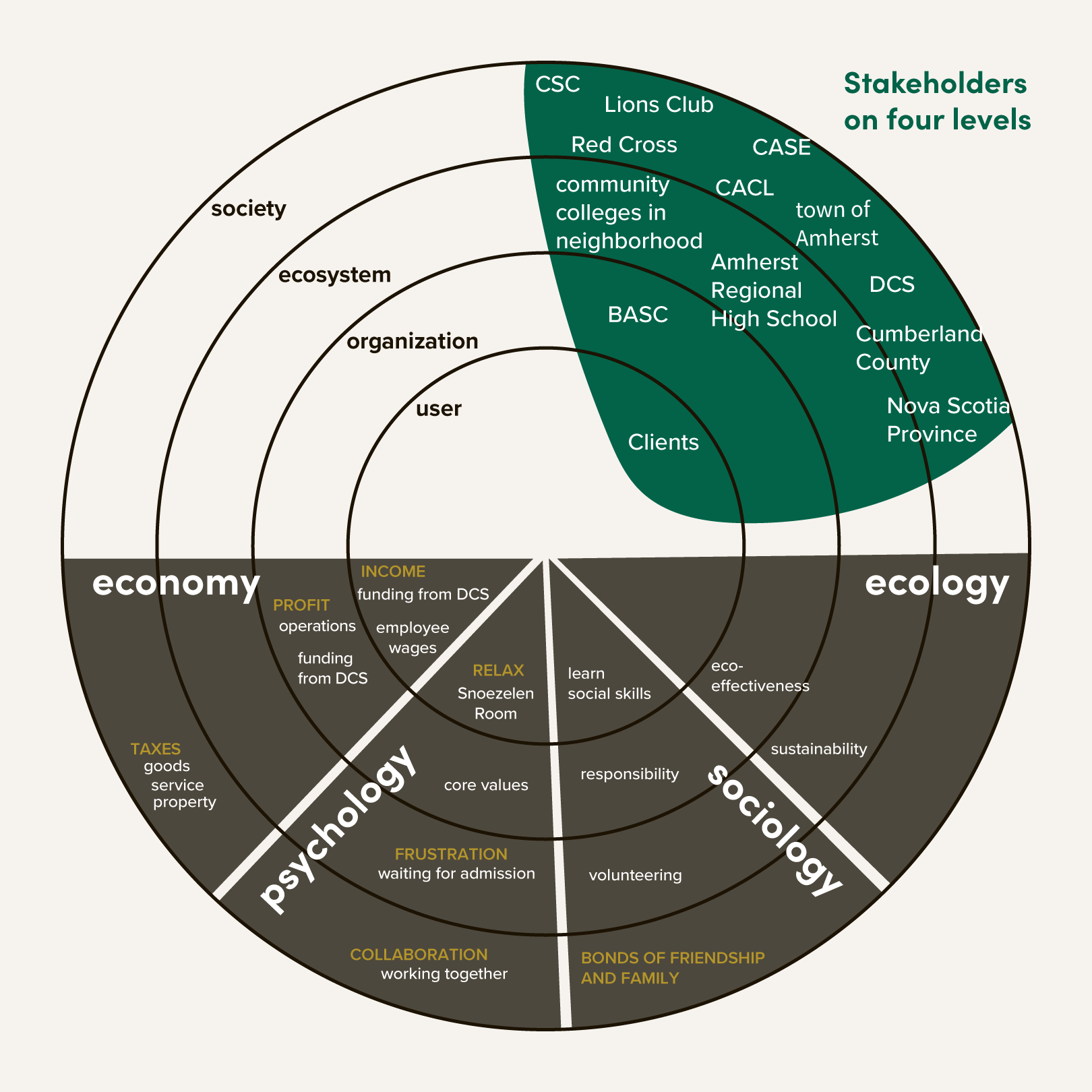
Value Framework Model
OPPORTUNITY
While working on the Value Framework Analysis, we identified opportunities to create value for users from a psychological perspective and to co-create value between users and society from a sociological perspective. We proposed two potential solutions.
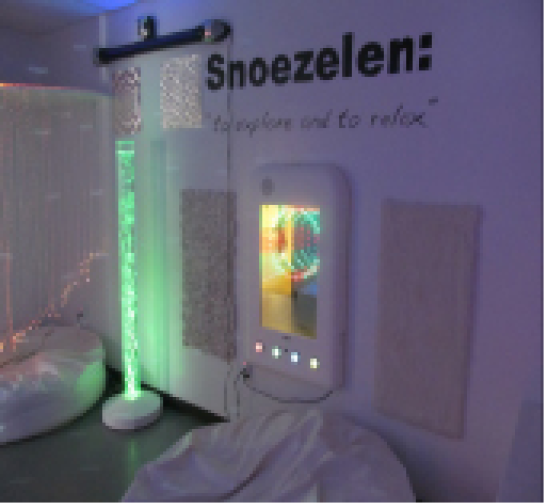
The Snoezelen Room
It is a type of multisensory experience for Clients. Client can seek out relaxation in Snoezelen Room. The interactions happening in Snoezelen Room between staff and employees would strengthen the relationships between them. Snoezelen Room would offer many accessible and stimulating opportunities for the employees and Clients.

Host Home Program
Adults with intellectual disabilities can live with their host home providers. This will help develop a meaningful relationship between Clients and the community. There would be a comprehensive matchmaking between Mentors and the individual Clients they service.
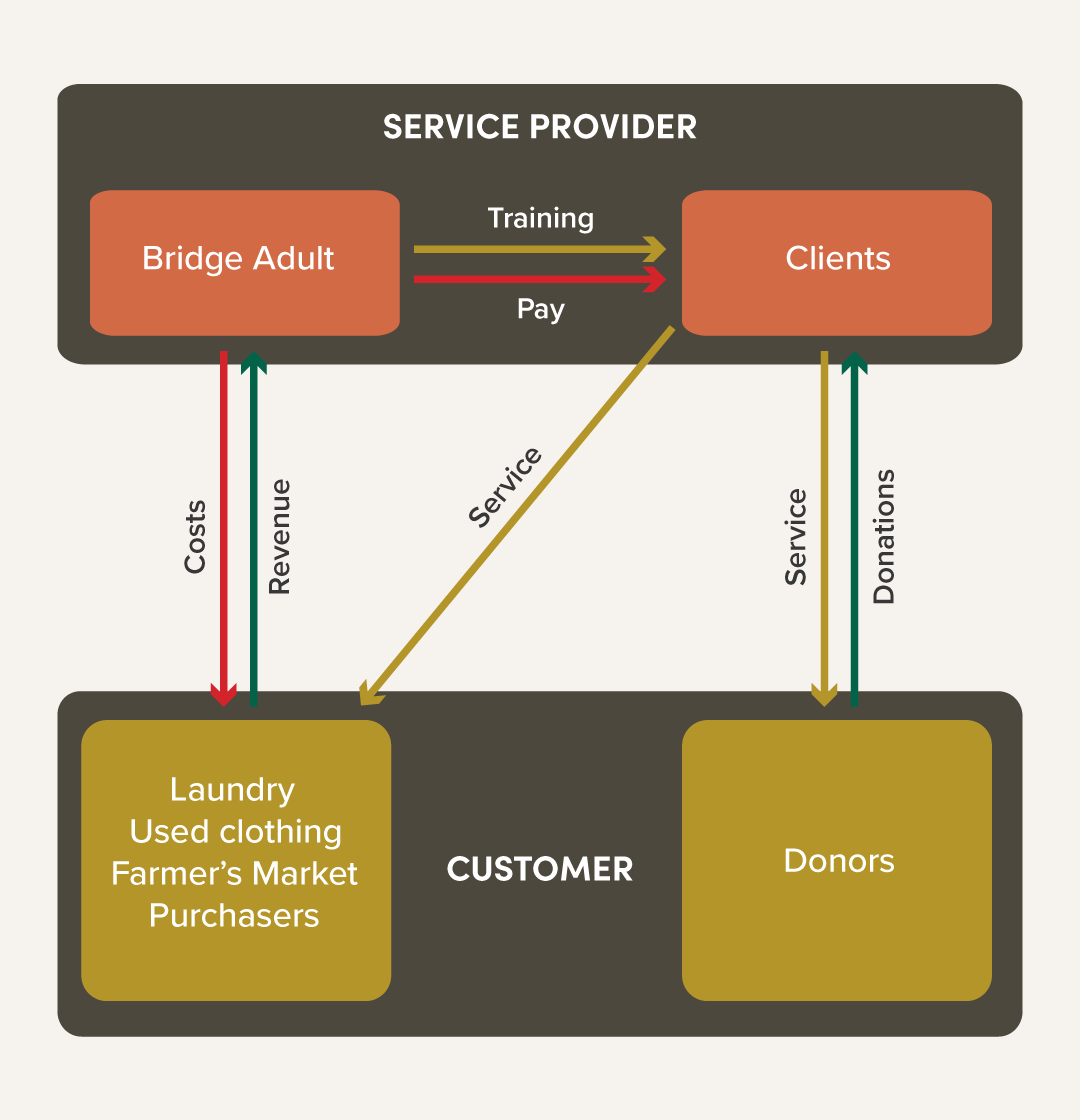
Distribution Channels
DISTRIBUTION CHANNELS
Bridge Adult provides services through client programs, revenue-generating businesses, and fundraising activities. While looking at these Distributing Channels, we realized that the primary customers of Bridge Adult are Clients (adults with intellectual disabilities), but they are not the paying customers. The paying customers are the external customers of revenue-generating businesses to which Bridge Adult serves.
CUSTOMER RELATIONSHIP
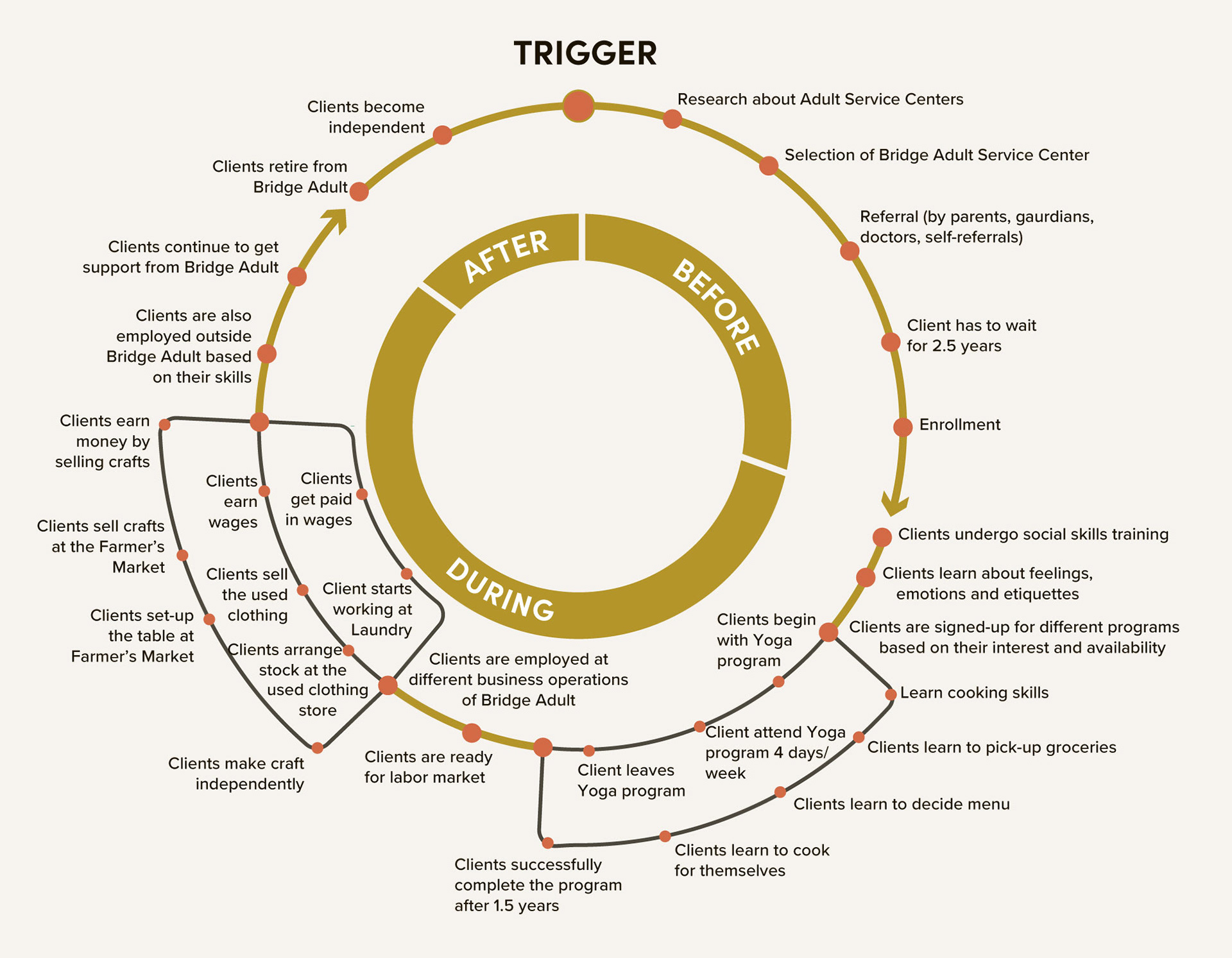
We used the Service Encounter Map to take a closer look at the interactions happening between Clients and Bridge Adult. Service Encounter Map usually has three phases: Before, During, and After. Trigger is the point at the beginning of before phase. We had to modify the Service Encounter Map to accommodate multiple options Clients have when it comes to programs and employment offered by Bridge Adult. Service Encounter Map is shown below.
Service Encounter Map
While working on the Service Encounter Map, we realized we did not have enough information for the After phase in the case study document, and in the research. This was an opportunity for us to suggest a potential solution for the After phase.
Since the objective of Bridge Adult is to make the Clients independent, we recommend that Bridge Adult continue supporting the Clients even after they leave. This will not have any direct financial impact on Bridge Adult, but they might be able to measure the impact of their services if Clients are monitored regularly. This is, of course, irrespective of whether Clients reach their full potential.
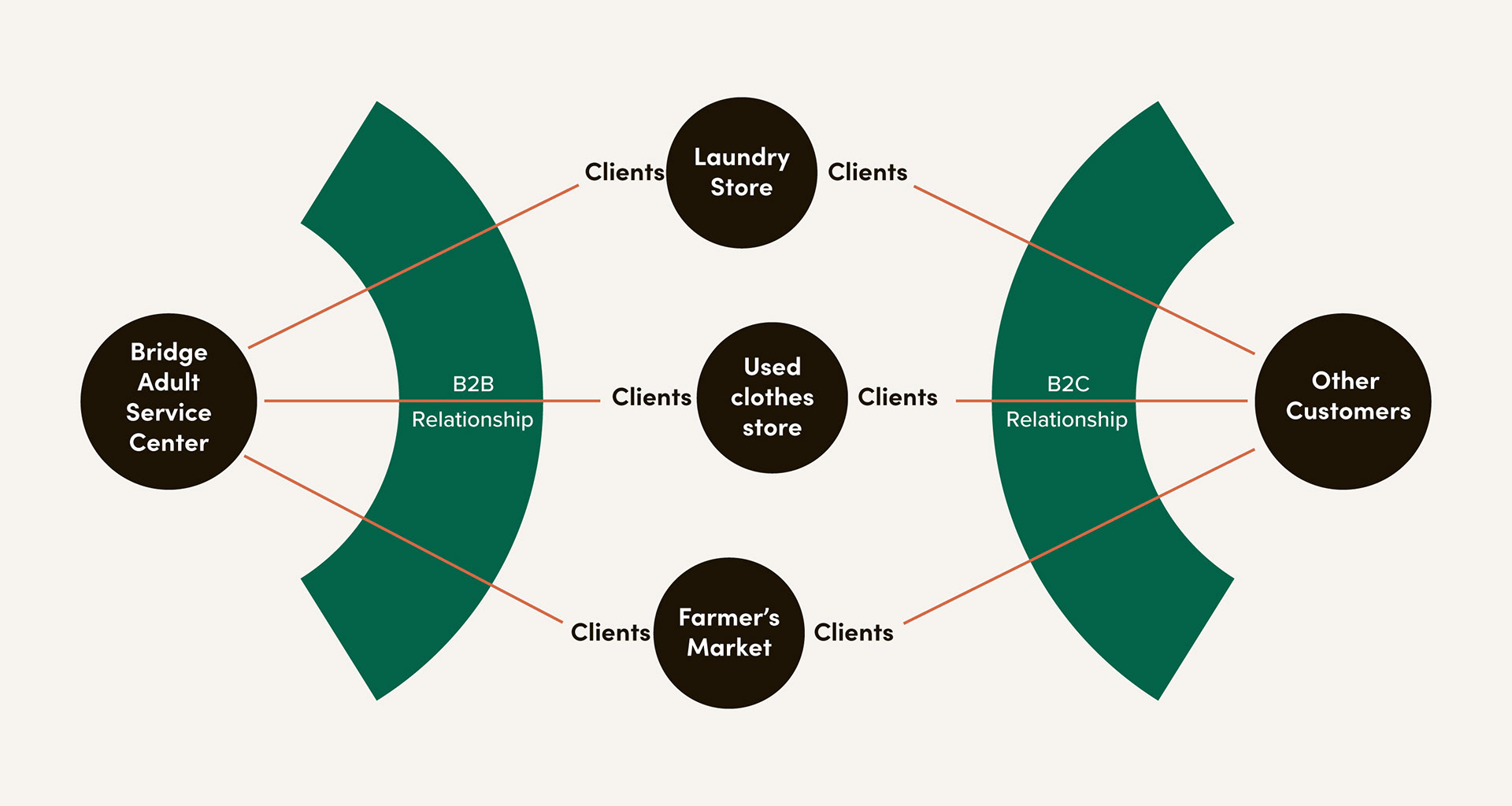
We learned that the Clients are in a unique position at Bridge Adult as they are customers of Bridge Adult but also provide services on its behalf. Clients are service providers to external customers through all three revenue-generating operations of Bridge Adult: The laundry store, the used clothes store, and the stall at the farmer's market.
Customer Relationship Model
SERVICE BLUEPRINT
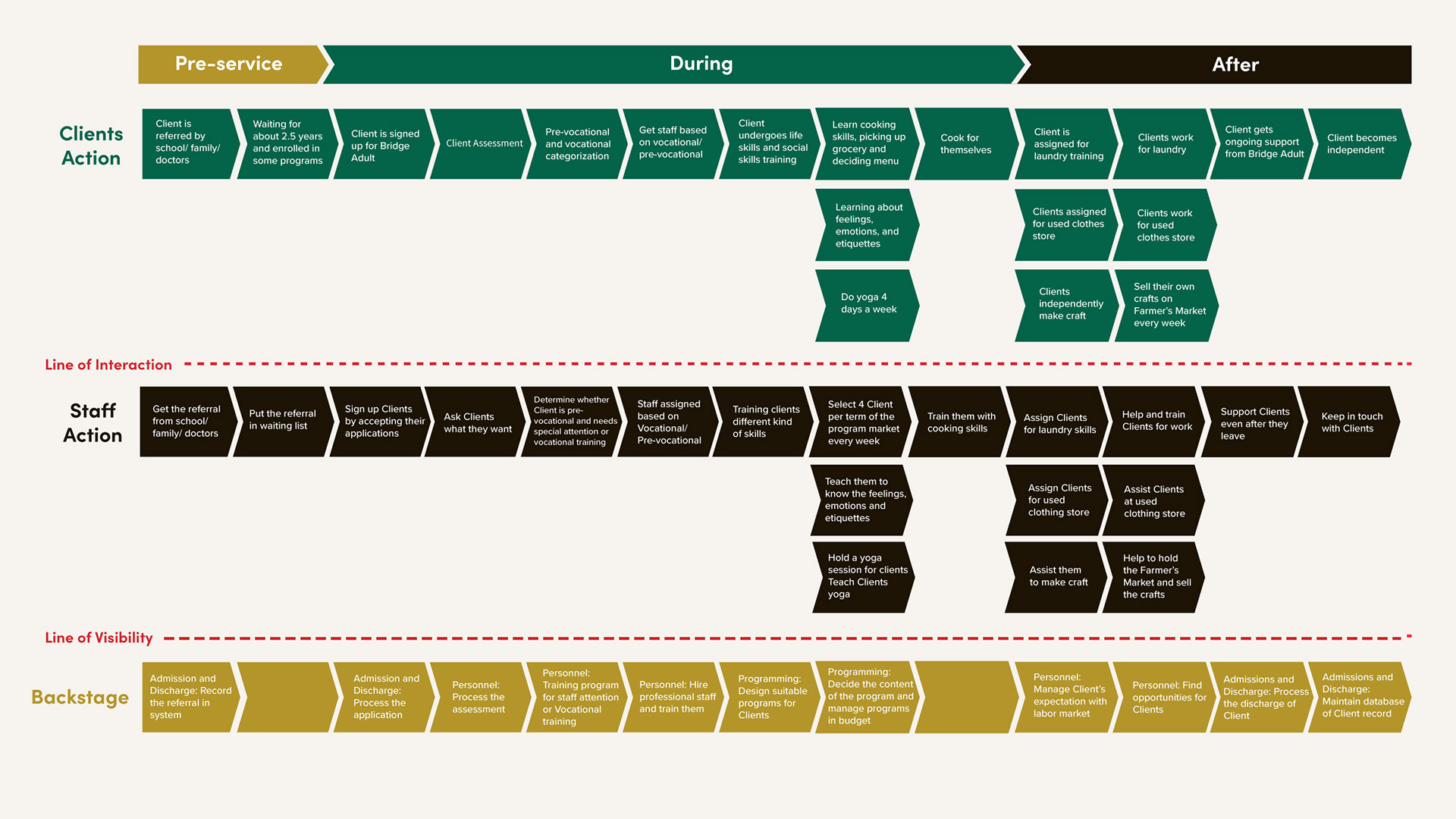
We used Jakob Schneider's "This is Service Design Thinking" to make a Service Blueprint. Blueprint allowed us to analyze processes on the front and back ends. In the blueprint shown below, we have identified the Client actions, the service delivery, and the corresponding staff actions. There is a line of interaction between the Client's action and the Staff's action. We have also identified the backend processes associated with each staff action. The line of visibility separates staff action from the back-end processes. Also, all Clients' actions, staff actions, and the backstage processes are categorized into pre-service, during service, and after service, similar to the Service Encounter Map.
From the blueprint, we noticed that there is about a 2.5 years of waiting for Clients to be admitted at Bridge Adult. We think it might add to the frustration of already waiting 3 years to turn 21 after graduating from high school.
Bridge Adult could address this by using marketing techniques to prevent clients from becoming frustrated and going somewhere else. Bridge Adult could expand its facility to alleviate the wait times. Another potential solution from Bridge Adult could be reaching out to the Clients at this stage and organizing specific sponsored programs for them. These programs will not only ensure that the Clients are trained early on, but also help them reach their full potential sooner.
Service Blueprint
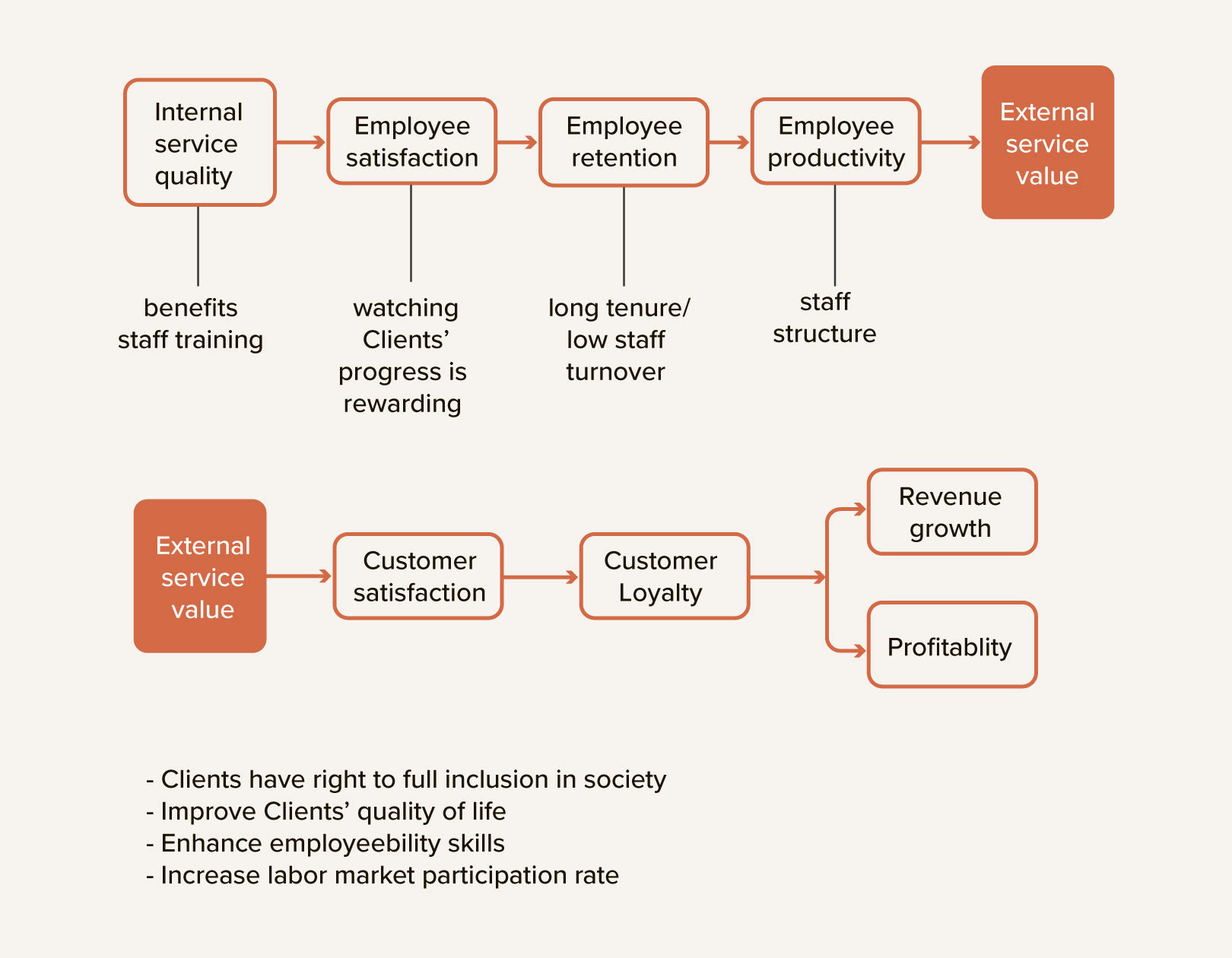
Service-Profit Chain Model
RESOURCES
We used James Heskett's Service-Profit Chain Model to analyze the resources, especially the human resources, as they are important. Human Resources for Bridge Adult is also one of their biggest expense in the balance sheet.
The DCS direction on the Client-to-staff ratio states that there should be one staff member per 8 vocational Clients and one per 3 pre-vocational Clients. Bridge Adult has 24 vocational Clients with different skill levels. Looking at 10 full-time and 5 half-time staff, Bridge Adult does not seem understaffed. They also have 7 volunteers from the nearby community college working for them.
We noticed that the full-time staff have been associated with Bridge Adult for a long time. To make sure they retain this year's knowledge, Bridge Adult should document the knowledge transfer. Bridge Adult could also ensure that retired staff are available to provide any assistance.
PARTNERS/ SERVICE ECOSYSTEM
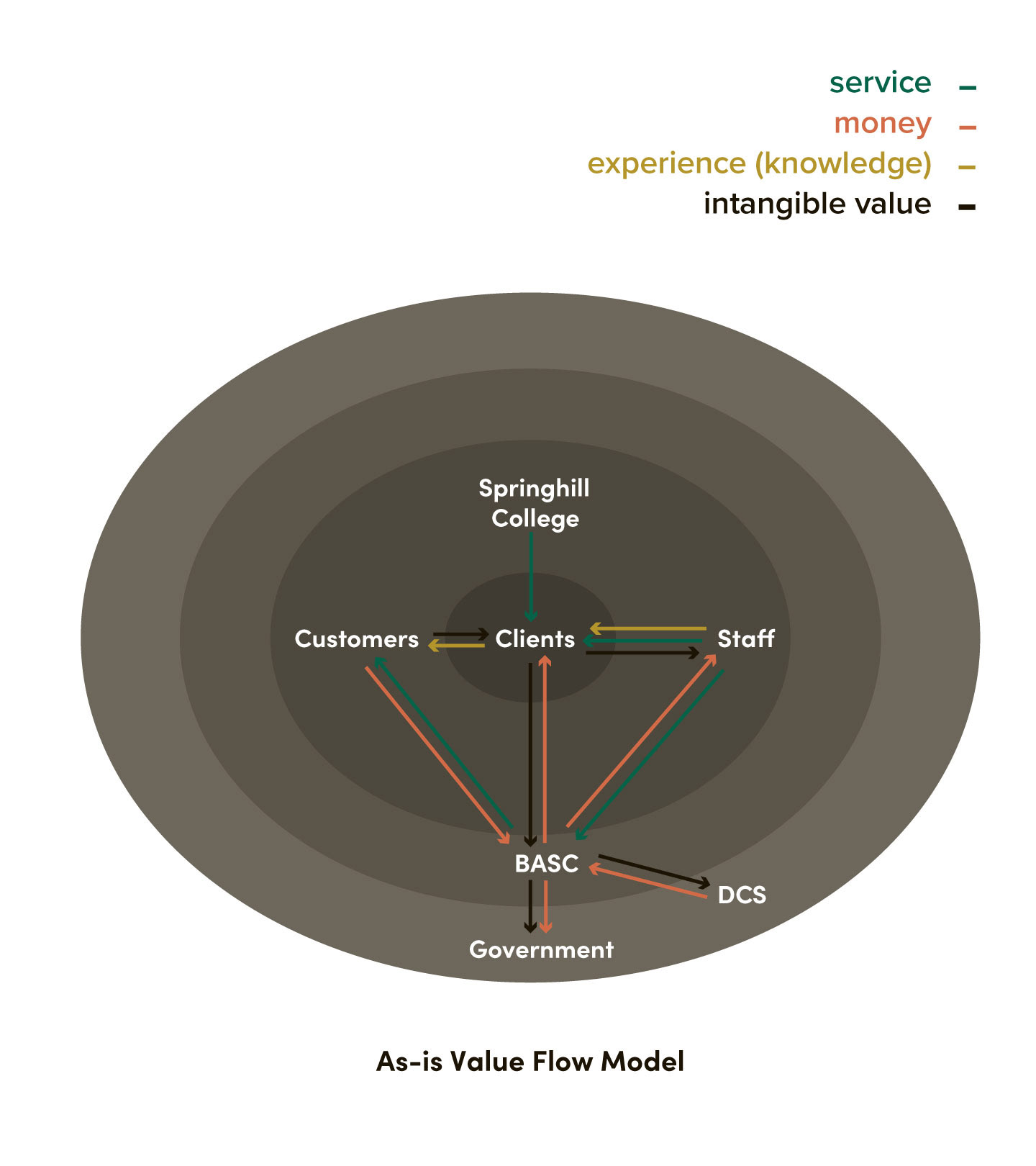
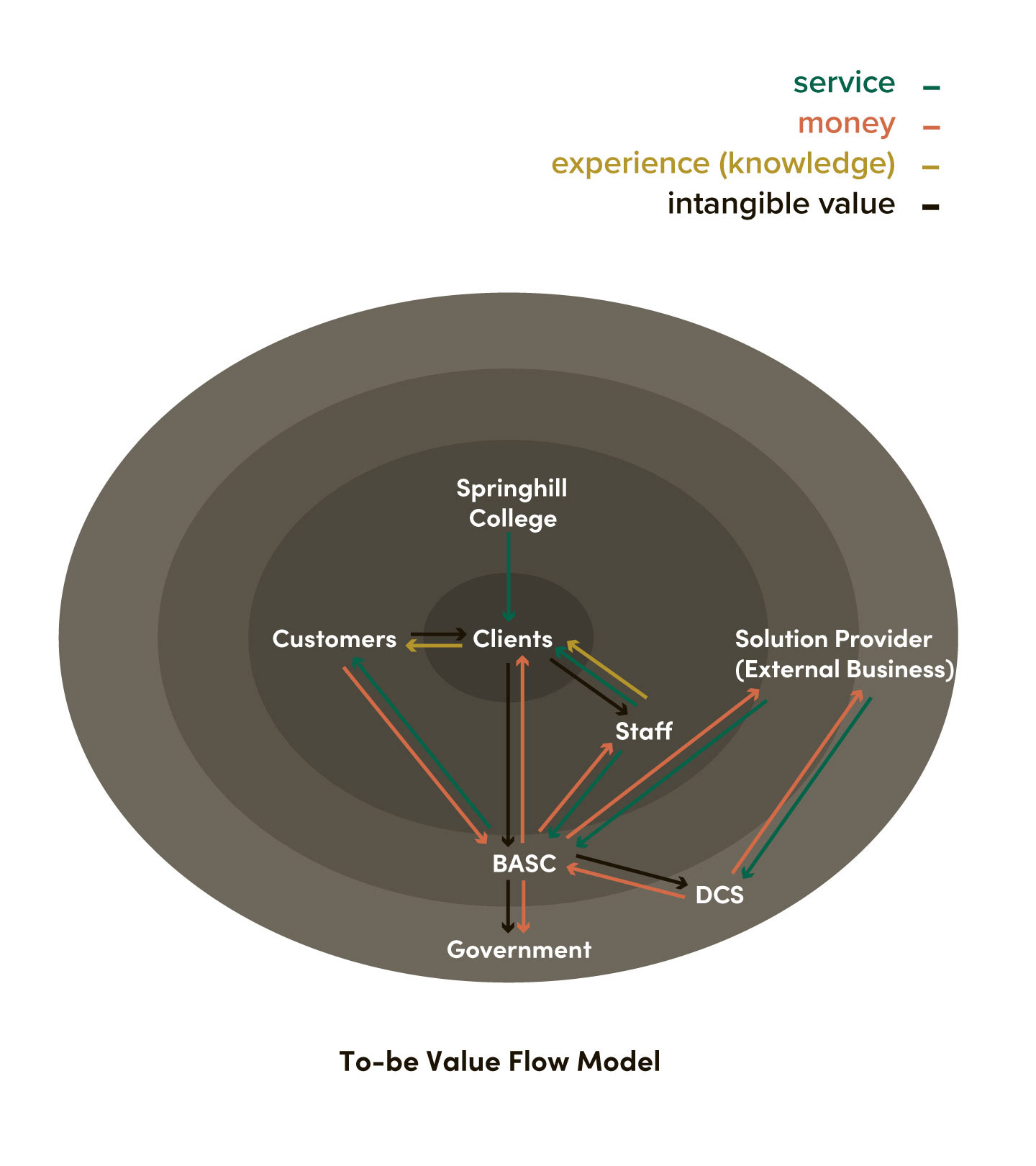
Elke Den Ouden's Value Framework helped us visualize how value flows between two partners/stakeholders. We captured all stakeholders values and clearly categorized them.
We found that the Client was getting value in terms of money only from Bridge Adult. We decided to introduce another solution provider into the current value model and to run another iteration of the Value Flow Model. The external business could receive services from the Clients and pay them directly. This also aligns with the objective to make the Client independent.
ORGANIZATIONAL CHANGE
We analyzed the services offered by Bridge Adult using a Service Package/ Augmented Service Offering Map. The Service Package shows 'making clients reach their full potential' as Bridge Adult's core service. Based on that, we have shown the essential enabling services and the enhancing services that differentiate Bridge Adult from its competitors.
Augmented Service Offering shows access to Bridge Adult service offerings for Clients, participation of the Client for different service offerings by Bridge Adult, and Interactions happening during the service.
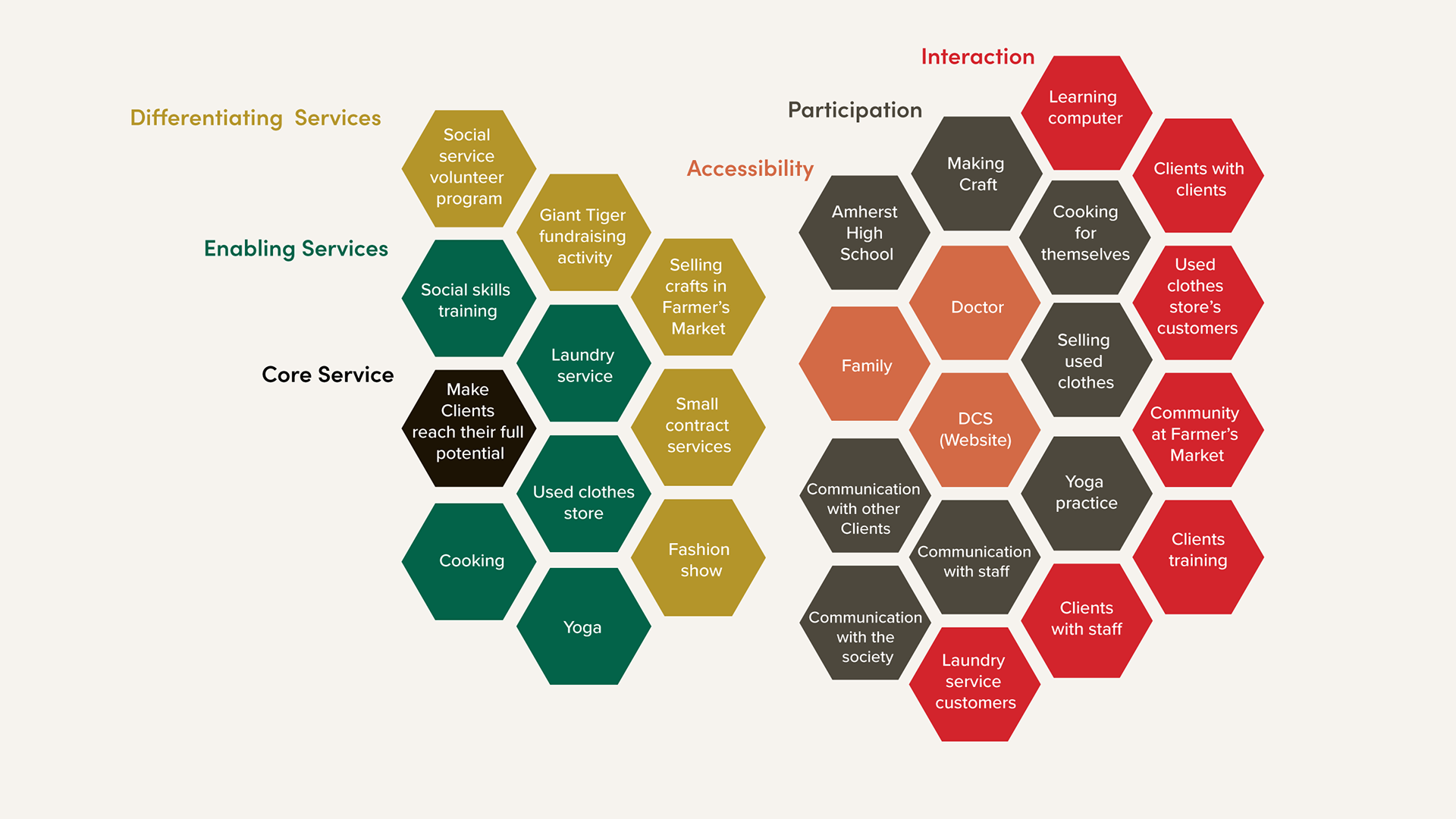
Service Package/ Augmented Service Offering Map
CONCLUSION
Bridge Adult values the contributions of experienced staff to provide quality services to Clients. Their partnership with other Adult Centers helps them exchange essential knowledge. Help from other organizations in the form of goods and services, rather than money, makes things easier for Bridge Adult.
Despite the above-mentioned factors working in Bridge Adult's favor, there are problems they need to address to achieve sustainable growth in the future. Bridge Adult could benefit from more effective marketing and advertising methods. Bridge Adult still did not have a website in early 2017. Bridge Adult could also improve its fundraising events.